Today we conclude our virtual tour of the prestigious buildings that make Parma an elegant city of historical interest, worthy of the title of Capital of Culture 2020.

Reserve Palace
Between Strada Garibaldi and Strada Cavour, we find the Palazzo della Riserva.
This palace is an important eighteenth-century building, commissioned by Duke Ranuccio II Farnese, who started the construction starting from 1673.
In 1750 it was completely renovated by Filippo di Borbone, with the intention of changing the organization of the city ducal residences, creating the two Louis XV style facades.
It was completed in 1766 by the will of Duke Ferdinando who commissioned the famous architect Ennemond Petitot to restructure a large part of the noble floor and to redesign the west facade with the neoclassical forms that the palace still retains today.
Currently part of the wing of the building is the seat of the Glauco Lombardi museum, which collects historical and artistic testimonies on Maria Luigia of Habsburg and Napoleon Bonaparte.
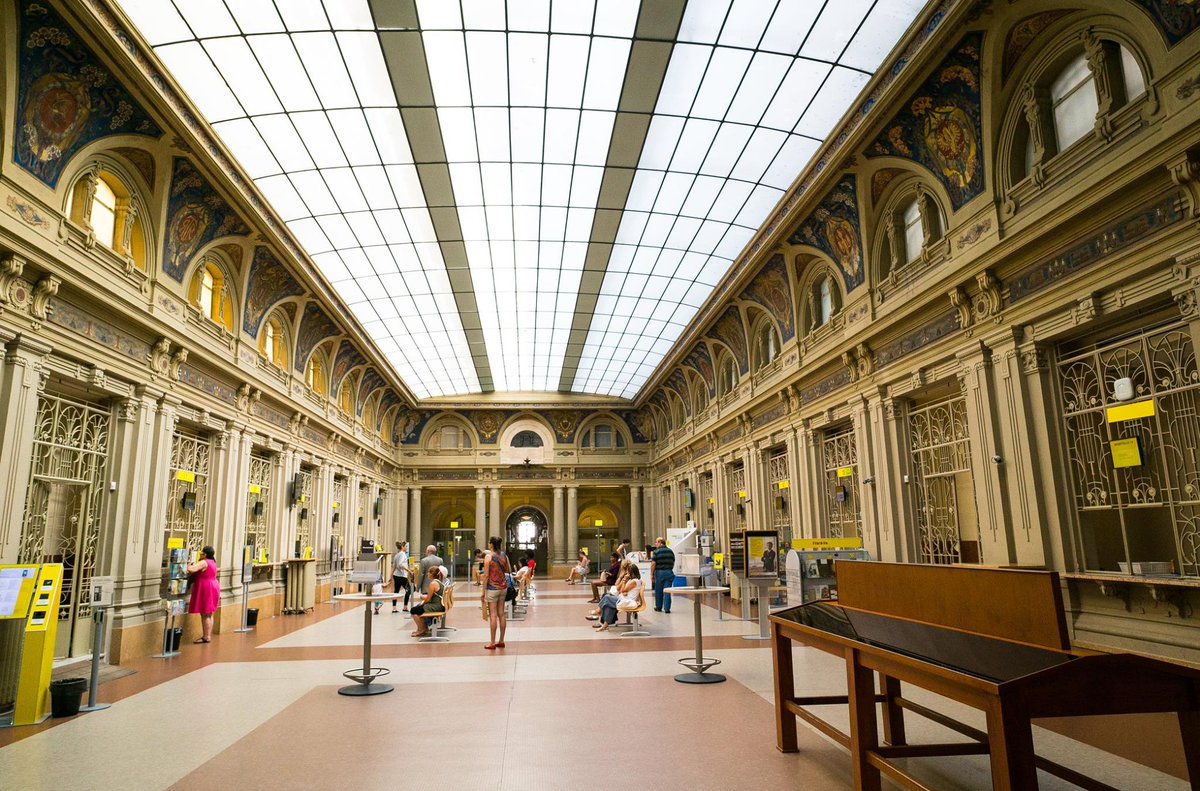
Post Office
Palazzo delle Poste is a beautiful Art Nouveau building, located on one side of the Palazzo di Riserva.
It was built in 1905 by the architect Modanno Chiavelli, to house the post office, in the area once occupied by the Ducal Theater.
Even today this imposing building houses the headquarters of the most important Italian shipping courier.

Returning to the Piazzale della Pace, near the monument dedicated to Giuseppe Verdi, this imposing structure is located, originally known as the Minister's palace, which today takes the name of the Palazzo dell'Inendenza di Finanza.
It was built around 1760 on a project by the famous architect Ennemond Petitot, destined to be the seat of the ducal governments. Instead following the unification of Italy, it became the seat of the peripheral organs of the state.
Even today, the interiors show the signs of the ducal splendor of the time and valuable works owned by the National Gallery of Parma are preserved there.

Advancing towards the Piazza del Duomo, in the beating heart of the city, we meet the Episcopal Palace, an ancient bishop's residence, dating back to 1055, when Bishop Cadalo gave orders to begin its construction.
In the following centuries it underwent numerous modifications, up to the restorations of the twentieth century which brought to light the important medieval elements (including the thirteenth-century three-light windows) and the Renaissance loggias.

Palazzo Dalla Rosa Prati
Next to the Duomo and the Baptistery, we also find a prestigious noble palace. It was built in the forms it still presents in the second half of the 18th century, with the characteristic facade balcony with wrought iron balustrade, the courtyard with arches and the vast main floor room probably painted by Benigno Bossi.Currently it has been transformed into a prestigious guesthouse, with some suites in which to spend pleasant moments during your stay in Parma.

Passing the Duomo our eyes will fall on an imposing noble palace. It was built around the first half of the 16th century and in 1639 it became the residence of the noble Sanvitale family, who a century later commissioned the architect Angelo Rasori to restructure the central part of the facade and build an entire new wing of the palace, including the vestibule and the grand staircase of honor, inaugurated in 1787.
Today it has become the headquarters of the Monte di Parma Foundation and has hosted the Amedeo Bocchi museum since 1999.

Major seminary
Continuing in the street that is interposed between the Duomo and the Baptistery, we meet the Major Seminary, ancient seat of the Chapter of the Cathedral of Parma.
It was originally built in 877 at the behest of Bishop Guibodo, but was completely rebuilt in Renaissance style in 1514 to a design by Gianfranco Ferrari d'Agrate.
In 1563 it became the seat of the diocesan seminary of Parma and towards the end of the XIX century it was totally transformed and enlarged.